
Restaurants run on some of the thinnest margins in small business, which means bookkeeping mistakes show up as real cash problems fast, not just messy year-end paperwork.
Prime Cost: The Number That Matters Most
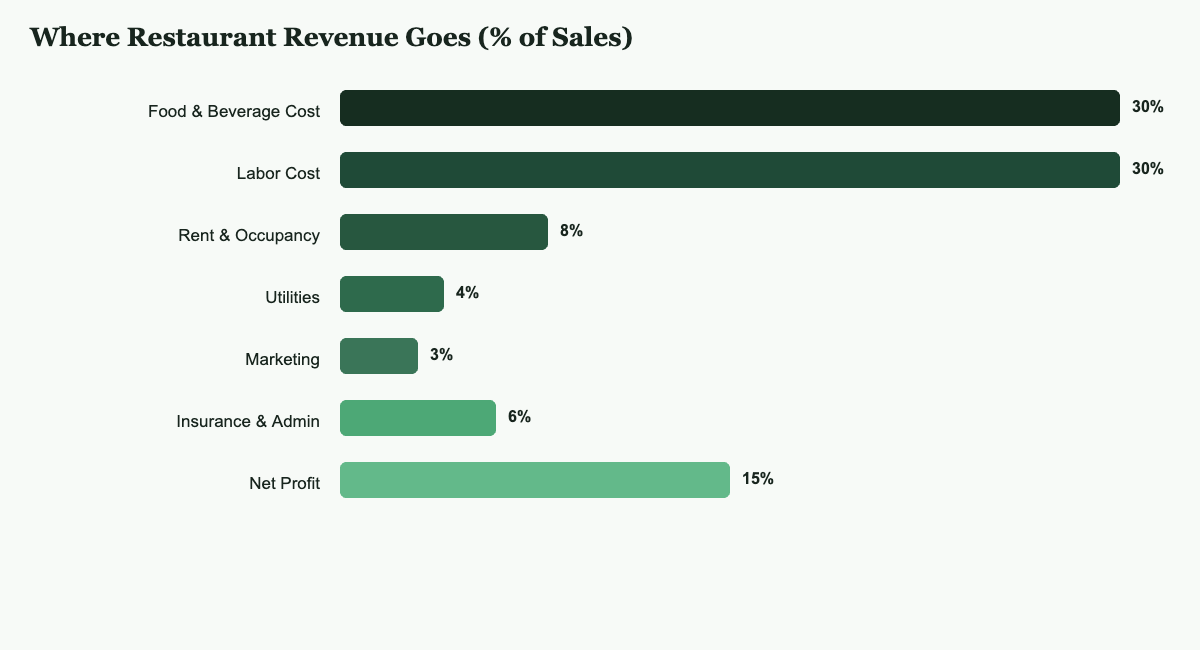
Prime cost is your food and beverage cost plus your total labor cost. Most healthy restaurants keep prime cost between 55% and 65% of sales. If you don’t know this number every single month, you’re running the business blind — it’s the fastest early warning sign that something is off, whether that’s portioning, waste, theft, or overstaffing.
Getting Cost of Goods Sold Right
COGS for a restaurant should be calculated as beginning inventory plus purchases minus ending inventory — not just what you spent on vendor invoices that month. Skipping physical inventory counts is one of the most common ways restaurant owners end up with a COGS number that looks fine on paper but is quietly wrong.
Tip Reporting and Payroll Compliance
Tip income has to be reported accurately for both your staff and the IRS. That means reconciling credit card tips, cash tips, and any tip pooling or tip-out arrangements every pay period — not catching up on it at tax time. Sloppy tip reporting is one of the more common triggers for a restaurant payroll audit.
Daily and Weekly Reconciliation Habits
Restaurants move too much cash and too many small transactions to reconcile once a month and call it good. The strongest operators reconcile POS deposits against the bank daily, and review vendor invoices, waste logs, and comps weekly. This is what actually catches cash flow problems before they snowball.
Vendor Terms and Cash Flow
Suppliers extend better pricing and more flexible terms to restaurants that pay accurately and on time. That reputation is built on clean accounts payable records — knowing exactly what you owe, to whom, and by when, instead of paying from whatever the bank balance looks like that day.
Monthly Restaurant Bookkeeping Checklist
- Calculate prime cost (food + beverage cost plus labor cost) as a percentage of sales
- Complete a physical inventory count to calculate true COGS
- Reconcile tip income against payroll records for every pay period
- Review vendor invoices and accounts payable aging
- Reconcile POS deposits against bank statements
- Review your P&L against the prior month and prior year
When Your Books Need a Cleanup
If you can’t answer what your prime cost was last month without digging, or your bank reconciliations are more than a few weeks behind, it’s worth getting a bookkeeper who understands restaurant accounting specifically — the categories, the inventory method, and the tip reporting rules are different from a typical small business.
Disclaimer: This article is for educational purposes. It is not tax advice. Talk with a qualified tax professional for guidance specific to your restaurant.